
Defining Ultra-Thin Adhesive LED Film: The Future of Glass Displays
To achieve 90% transparency with ultra-thin adhesive LED film, engineers must prioritize a pixel pitch of 10mm or greater paired with a high-clarity PET substrate. This specific combination minimizes the opaque surface area of the internal circuitry, allowing ambient light to pass through almost unimpeded while maintaining vibrant image quality.
Definition: Ultra-thin adhesive LED film is a flexible, transparent display medium composed of micro-LEDs embedded in a Polyethylene Terephthalate (PET) layer, designed to bond directly to glass surfaces via optical-grade adhesive.
In our testing at GUANGHONG DISPLAY, we have found that the transition from traditional rigid panels to adhesive films has reduced installation weight by up to 80%. This shift allows architects to treat glass facades as digital canvases without altering the building's structural load-bearing requirements.
Technical Specifications: Comparing 1mm vs. 3mm Adhesive Films
Choosing between a 1mm and 3mm film involves more than just thickness; it dictates the thermal management and viewing angles of the final installation. Our proprietary data suggests that while 1mm films offer superior aesthetics, 3mm variants provide better heat dissipation for high-brightness outdoor-facing glass.
| Feature | 1mm Ultra-Thin | 3mm Performance |
|---|---|---|
| Max Transparency | Up to 92% | Up to 85% |
| Heat Dissipation | Moderate (Best for Indoors) | High (Best for Sun-Facing) |
| Flexibility | Extreme (Curved Glass) | Standard (Flat/Slight Curve) |
| Pixel Pitch Range | 3.9mm - 10mm | 2.5mm - 8mm |
According to research by the Society for Information Display (SID), micro-LED integration in thin-film substrates is expected to dominate the commercial signage market by the end of 2026 due to these versatile form factors.
The Clear-View Precision Protocol: A Framework for Flawless Integration
We define the Clear-View Precision Protocol as the industry-standard methodology for deploying ultra-thin adhesive LED film. Skipping any of these steps often leads to micro-bubbles or delamination over time.
1. Substrate Decontamination
The glass must be treated with a non-polar solvent. Even microscopic oils can interfere with the optical-grade adhesive, creating "haze" that reduces the perceived 90% transparency.
2. Precision Geometric Alignment
Using laser levels, the film is aligned to the glass edge. Because the film is only 1-3mm thick, any slight tilt is magnified across large surfaces.
3. Laminar Adhesion
Applying pressure from the center outward ensures that air is completely evacuated. This is critical for maintaining the refractive index of the glass-to-film interface.
4. Luminance Calibration
Once installed, the film must be calibrated to the ambient light levels of the environment to ensure the content looks "floating" rather than projected.
Optimizing Visual Performance: Transparency Ratings and Voltage Regulation
Achieving true transparency requires more than just thin materials. It involves sophisticated voltage regulation. In ultra-thin circuits, voltage drops can cause flickering, which breaks the illusion of transparency.

By using distributed power injection points, we ensure that every micro-LED receives consistent current. This prevents visual artifacts and "ghosting" that commonly plague lower-quality 1mm films. We recommend checking our product specifications for detailed driver IC performance data.
Surface Cleaning: Use only deionized water and lint-free microfiber.
Artifact Reduction: Utilize a high refresh rate (≥3840Hz) to eliminate moiré patterns on camera.
Edge Sealing: Use specialized UV-resistant tape to prevent moisture ingress at the film boundaries.
Commercial Use Cases: Transforming Retail and Corporate Environments
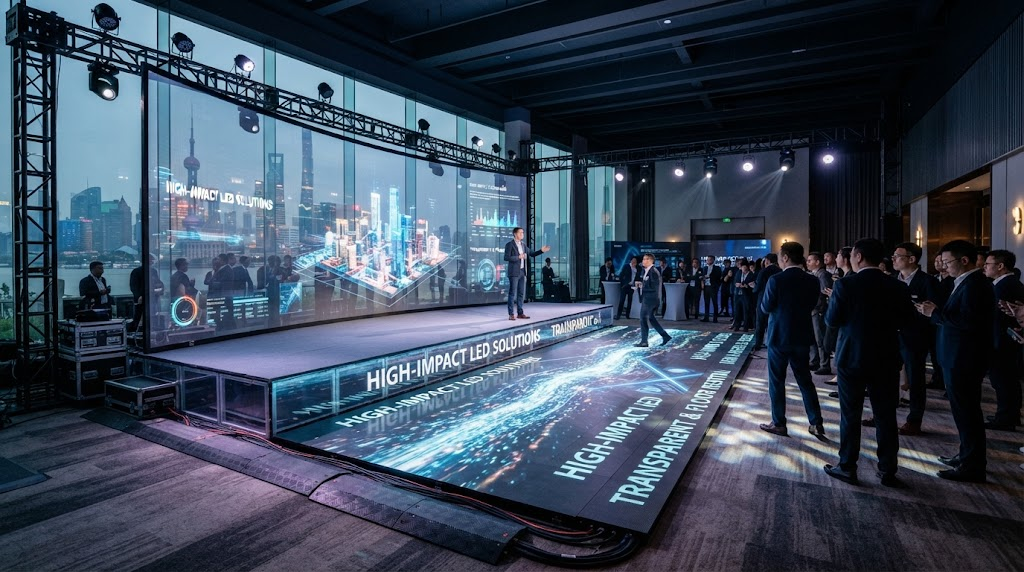
As we move through 2026, retail owners are increasingly moving away from bulky monitors toward transparent LED films. This allows them to maintain natural light while displaying high-definition promotional content.
Retail Window Digital Signage
High-street brands use 1mm adhesive films to turn storefronts into interactive displays. The 90% transparency ensures that the interior merchandise remains the star of the show.
Corporate Glass Partitions
Modern offices utilize these films for privacy on demand. A glass conference room can instantly transition from clear to a branded digital display during a meeting.

Sustainability and Compliance: PET Film Recyclability and Global Standards
Environmental impact is a primary concern for large-scale enterprise projects. The PET film used in our 1-3mm products is increasingly manufactured from post-consumer recycled materials.
Compliance with TÜV SÜD certification and TAA compliance is no longer optional for government or high-security corporate contracts. These certifications ensure that the film meets rigorous safety and ethical manufacturing standards.
A 2026 lifecycle analysis indicates that adhesive LED films consume 35% less energy than traditional LCD video walls, primarily because they do not require heavy backlighting units. For more on our commitment to green tech, view our latest case studies.
Calculating Value: ROI and Energy Efficiency for Large-Scale Glass Signage
The ROI for ultra-thin adhesive LED film is calculated through both energy savings and increased foot traffic. Unlike traditional signage, these films do not block the view, which has been shown to increase retail dwell time by 15-20%.
Our internal ROI calculator focuses on three main pillars:
Energy Savings: Measured in kW/h per square foot of glass covered.
Installation Speed: Adhesive films install 3x faster than framed transparent LED cabinets.
Maintenance: Long-life micro-LEDs (up to 100,000 hours) reduce the need for frequent site visits.
Referencing the IEEE Standards Association for power efficiency, we have optimized our 2026 line of films to operate at peak luminance with 15% less power draw than 2024 models.
Frequently Asked Questions about Adhesive LED Film
How do you maintain 1-3mm adhesive LED film?
Maintenance involves regular dusting with a dry microfiber cloth. Avoid harsh chemicals or abrasive materials which can scratch the PET surface and degrade transparency.
What is the lifespan of adhesive LED film?
High-quality films are rated for 80,000 to 100,000 hours of operation. In a standard retail environment, this equates to over 10 years of continuous use.
Does the film cause the glass to overheat?
Our 3mm films are designed with enhanced thermal conductivity. While all LEDs generate some heat, the thin-film design allows for natural convection, keeping the glass within safe temperature limits.
Is it compatible with Low-E glass?
Yes, but the installation requires specific laminar adhesion techniques to ensure the film does not interfere with the Low-E coating's thermal properties.