
Multi-layer vs. Dual-layer FPC: A Strategic Engineering Guide for 2026
Flexible Printed Circuits (FPCs) are the nervous system of modern hardware. As we move deeper into the era of 6G connectivity and edge AI, the choice between Multi-layer and Dual-layer architectures is no longer just about cost—it is about the physical limits of copper and the dielectric properties of next-gen substrates. Choosing the wrong stack-up leads to more than just signal attenuation; it results in catastrophic mechanical failure in high-flex applications like S-shaped LED walls.
Defining the Stack-up: Core Differences in FPC Architecture
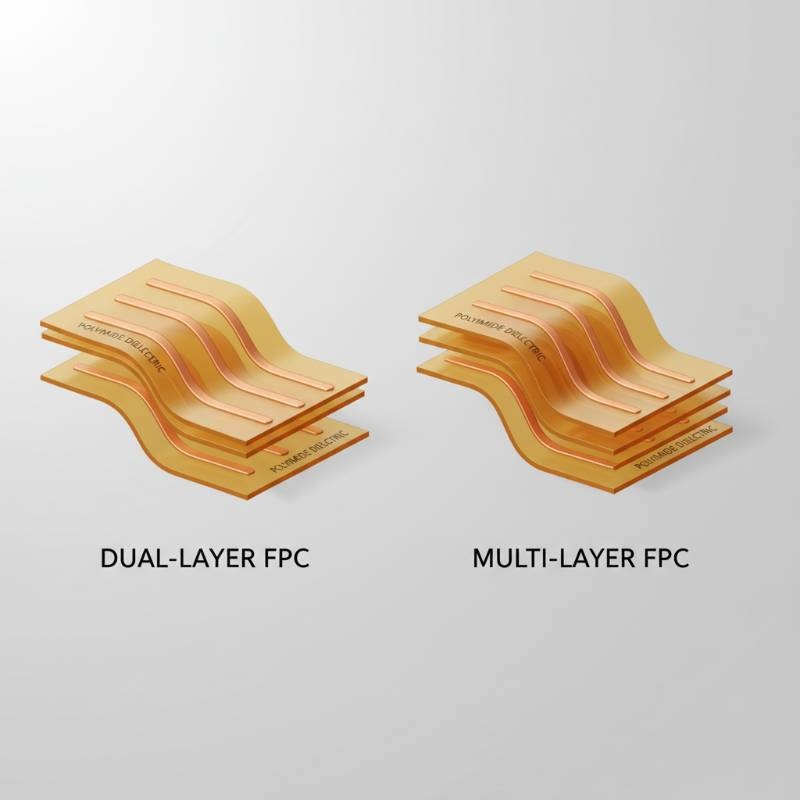
A Dual-layer FPC consists of two conductive copper layers separated by a polyimide (PI) dielectric. It is the workhorse of the industry, providing double-sided routing and shielding without sacrificing the thin profile required for dynamic flexing.
"Multi-layer FPC (3+ layers) utilizes high-density interconnect (HDI) technology, complex via structures, and multiple dielectric layers to accommodate the extreme routing density required by 6G chipsets."
In 2026, the industry has shifted. While flexible LED displays used to rely on single-layer designs, the integration of local AI processing on the strip itself now demands the sophisticated routing of a Multi-layer FPC. The trade-off is thickness. Every added layer increases the "I-beam effect," where the outer layers experience significantly higher stress during a bend than the inner layers.
The Flex-Integrity Protocol™: Our Proprietary Reliability Framework
At GUANGHONG DISPLAY, we define reliability through the Flex-Integrity Protocol™. This is our mandatory three-phase methodology for any circuit subjected to non-linear mechanical stress.
1. Stress-Mapping
Before fabrication, we map the strain distribution across the circuit. We use Finite Element Analysis (FEA) to identify "hot spots" where copper foil thickness might lead to premature fatigue. For Multi-layer FPC designs, this ensures that vias are never placed in high-strain zones.
2. Material-Matching
We match the Coefficient of Thermal Expansion (CTE) of the copper to the substrate. In 2026, using adhesiveless FPC materials is our "Golden Rule." Adhesive-based FPCs are prone to delamination under the heat generated by high-brightness LEDs.
3. Fatigue-Forecasting
Using bending fatigue resistance data from IPC standards, we project the lifecycle of the installation. If the S-shaped installation requires more than 5,000 micro-flex cycles, we move the conductive traces to the neutral axis—the center of the stack-up where stress is zero.
2026 Material Evolution: LCP and PEN in High-Frequency Circuits
Polyimide (PI) was the king of the 2010s. Today, Liquid Crystal Polymer (LCP) is the standard for 6G and high-speed data transmission. LCP has a moisture absorption rate of nearly zero, making it dimensionally stable in humid environments—a critical factor for outdoor LED installations.
Why choose LCP for your Multi-layer FPC?
Low Dielectric Constant (Dk): Essential for maintaining signal integrity at 28GHz and above.
Low Dissipation Factor (Df): Reduces heat generation in high-power LED strips.
Smooth Copper Foil: Minimizes "skin effect" losses in high-frequency circuits.
Bending Physics and Fracture Prevention in S-Shaped LED Designs
S-shaped LED strips are notoriously difficult. They don't just bend; they twist. This creates torsional stress that a standard Dual-layer FPC often cannot handle if the traces are wide.
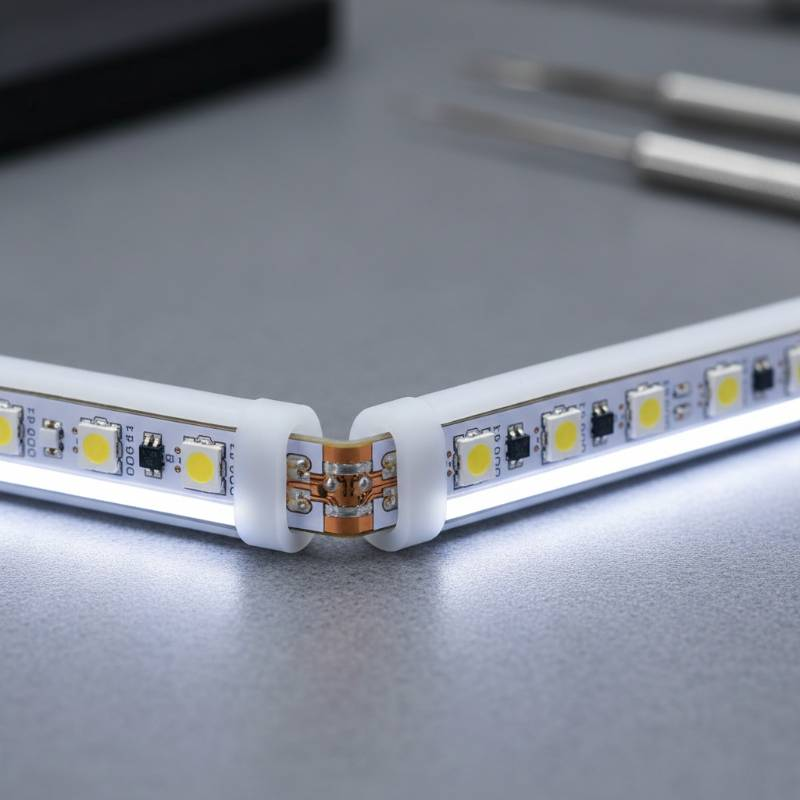
The "First Principle" of S-shaped installations: The Neutral Axis Principle. To prevent circuit fractures, the copper layer must reside exactly in the center of the total thickness. In a multi-layer stack, this means placing critical power and signal traces in layers 2 and 3 of a 4-layer board, using layers 1 and 4 as sacrificial buffers or EMI shields.
| FPC Type | Typical Thickness | Min. Bend Radius | Fatigue Limit |
|---|---|---|---|
| Single-Layer | 0.05mm | 0.5mm | Very High |
| Dual-Layer FPC | 0.10mm | 1.0mm | High |
| Multi-Layer FPC | 0.25mm+ | 5.0mm+ | Moderate |
Thermal Management and Signal Integrity: When to Scale
When does an engineer jump from a dual-layer to a multi-layer stack? It usually happens when EMI shielding and thermal management become conflicting priorities. In high-density LED walls, the heat from the driver ICs can throttle performance.
According to our analysis at GUANGHONG DISPLAY, using internal copper planes in a multi-layer FPC acts as a heat sink, spreading thermal energy away from the LEDs. This increases the lifespan of the display by up to 30% compared to dual-layer designs where heat is trapped between the coverlay and the substrate.
Cost Analysis and Decision Matrix for Hardware Product Managers
Engineering excellence must coexist with budget reality. A 4-layer Multi-layer FPC can cost 2x to 3x more than a Dual-layer FPC. However, the ROI is found in the reduction of Field Failure Rates (FFR).
For large-scale architectural projects using S-shaped LED strips, the cost of replacing a single failed module often exceeds the initial savings of a cheaper FPC. We recommend Multi-layer stacks for any application involving:
High-speed data (USB 4.0, 6G, PCIe Gen 5/6).
Embedded microcontrollers or AI accelerators.
Constant dynamic flexing (robotic arms, wearables).
Frequently Asked Questions about FPC Layering
Can a Multi-layer FPC be as flexible as a Dual-layer?
Technically, no. Physics dictates that increased thickness increases stiffness. However, using "book-binder" construction—where layers are not bonded in the flex area—can significantly improve the bend radius of a Multi-layer FPC.
What causes circuit fractures in S-shaped LED installations?
Most fractures are caused by "work hardening" of the copper. When a strip is bent too tightly or repeatedly, the copper becomes brittle and snaps. The Flex-Integrity Protocol™ mitigates this by using rolled-annealed (RA) copper instead of electro-deposited (ED) copper.
Is LCP always better than Polyimide for 2026 hardware?
LCP is superior for high-frequency signals and moisture resistance. However, PI is still preferred for high-temperature environments (up to 400°C) and is generally more cost-effective for standard power distribution.
Ready to Engineer Failure-Proof Displays?
Don't let circuit fractures derail your next S-shaped LED installation. Consult with our technical team to implement the Flex-Integrity Protocol™ in your next project.
Get Technical Specs Now