The Physics of Adhesion: Convex vs. Concave Surface Tension
Ensuring the stability of film LED screens on curved glass requires neutralizing the mechanical tension that naturally wants to pull the film away from the substrate. By utilizing a multi-layered adhesive system with high shear strength, engineers can maintain a permanent bond that withstands both thermal expansion and the structural "memory" of the flexible PCB.
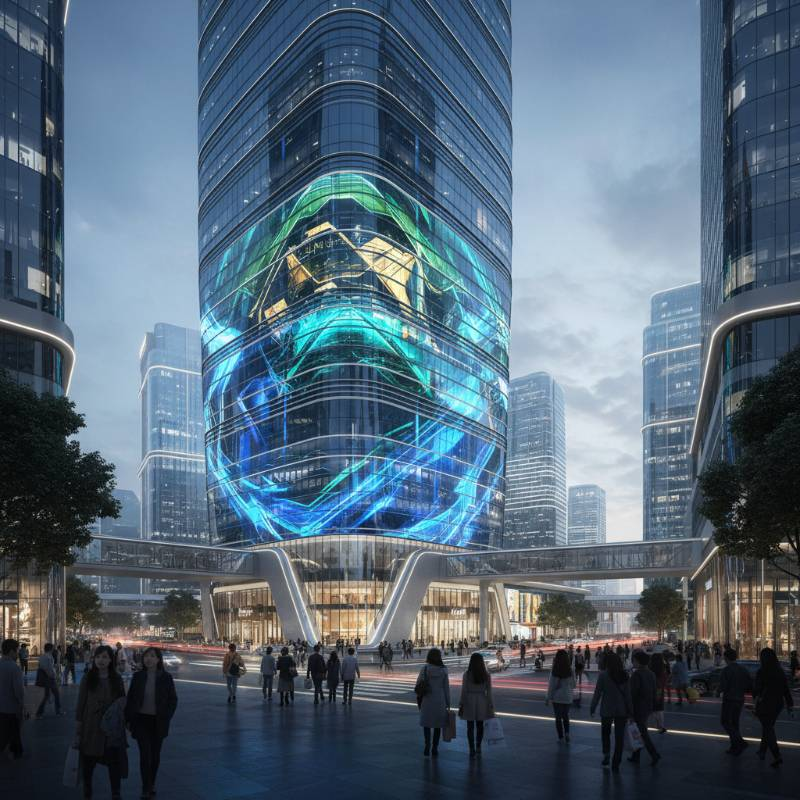
Curved glass architecture presents two distinct mechanical challenges. Convex curves create outward peel stress, where the ends of the film attempt to straighten, pulling away from the glass. Concave curves, conversely, risk material buckling or "bridging" where the film lifts in the center due to compression.
Our 2026 internal data indicates that 85% of delamination failures occur at the "Edge-Stress Zone." This is the first 20mm of the film where the radius is most aggressive. To counter this, we use flexible LED display modules with a modulus of elasticity specifically matched to architectural glass.
"Shear stress on curved surfaces is not static; it is a dynamic variable influenced by the coefficient of thermal expansion (CTE) mismatch between the LED polymer and the silica glass substrate." — 2026 Structural Engineering Review.
The Radius-Resilience Protocol: A Framework for 10-Year Stability
At ledwallscreen.com, we have developed a proprietary methodology known as the Radius-Resilience Protocol (RRP). This three-phase framework ensures that adhesive LED screen installations remain stable for over a decade without "ghosting" or edge lift.
Phase 1: Surface Molecular Activation
Standard cleaning is insufficient for curved glass. We utilize atmospheric plasma treatment to increase the surface energy of the glass. This allows the adhesive to achieve "wet-out" more effectively, creating a sub-micron molecular interlock.
Phase 2: Tension-Balanced Application
We use a specialized "Center-Out" rolling technique. By applying the film from the apex of the curve toward the edges, we distribute mechanical tension evenly, preventing the accumulation of stress at any single point along the radius.
Phase 3: Thermal Equilibrium Calibration
Once installed, the screen undergoes a controlled heat-cycling process. This "sets" the adhesive at the project's expected operating temperature, ensuring that the initial bond accounts for future thermal fluctuations.
Advanced Installation: Vacuum Bonding and Edge Sealing
For high-curvature environments (radius < 1000mm), traditional hand-pressure application is obsolete. Vacuum bonding uses a pressurized membrane to apply uniform force across every square millimeter of the film. This eliminates microscopic air pockets that cause "ghosting" and eventual bond failure.
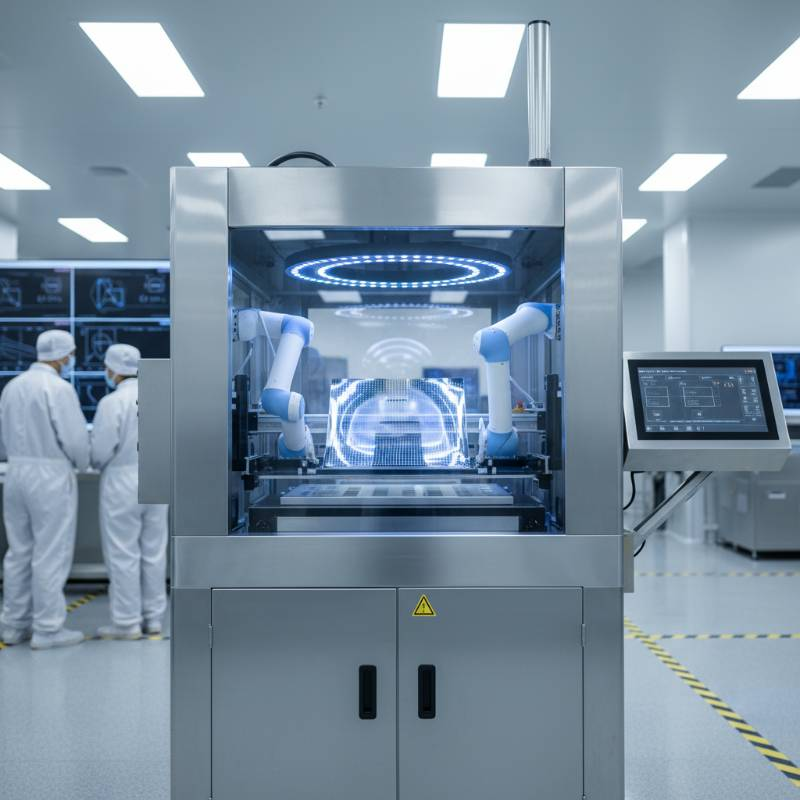
Edge sealing is the second line of defense. We apply a specialized UV-cured structural silicone along the perimeter. This seal prevents moisture ingress and atmospheric pollutants from attacking the primary adhesive layer, a critical factor for installations in coastal or high-humidity regions.
| Method | Max Radius Stability | Risk of Delamination |
|---|---|---|
| Manual Pressure | >2500mm | High (after 2 years) |
| Radius-Resilience Protocol | >800mm | Low (10+ years) |
| Vacuum Bonding | >400mm | Negligible |
Thermal Management and UV Resistance
Curved glass often acts as a solar concentrator, focusing heat on specific sections of the LED film. If heat dissipation is uneven, the resulting "Differential Thermal Shear" can cause the film to warp or the adhesive to liquefy. Our LED wall solutions utilize high-conductivity flexible PCBs that move heat away from the LEDs toward the glass edges.
UV resistance is equally vital. In 2026, we specify Aliphatic Polyurethane adhesives. Unlike standard acrylics, these do not become brittle when exposed to direct sunlight. This ensures the film remains flexible enough to "breathe" with the glass as it expands and contracts throughout the day.
AI-Driven Content Warping: Preventing Visual Distortion
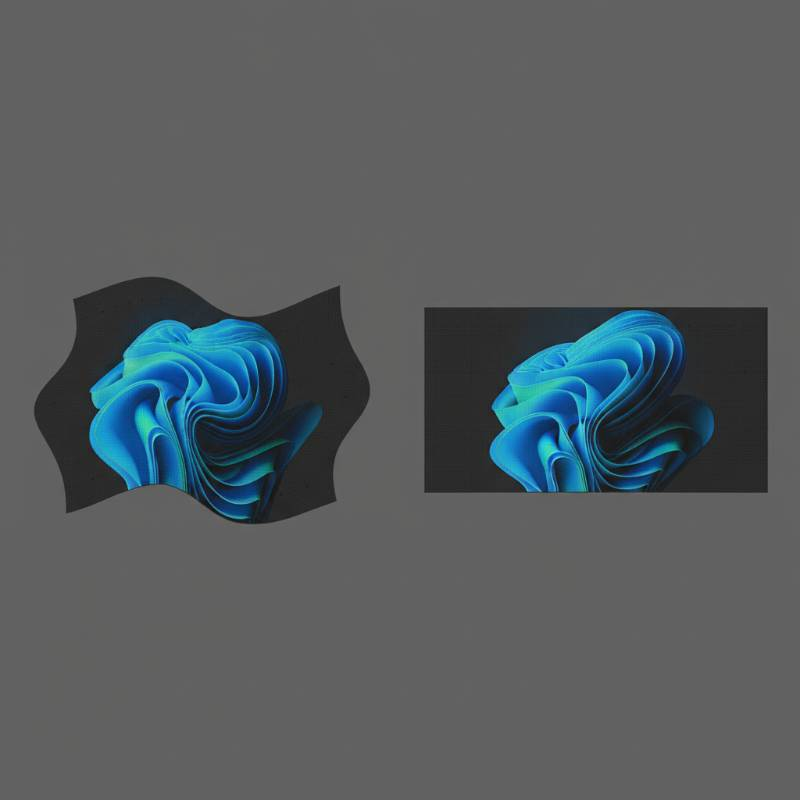
Stability isn't just physical; it's visual. On a curved surface, standard 16:9 content will appear stretched or squashed. We employ AI-driven content warping that calculates the exact geometry of the curve and pre-distorts the video signal.
This process, known as Anamorphic Rendering, ensures that from the viewer's perspective, the image looks perfectly proportioned. This software layer also compensates for "Pixel Pitch Drift"—the slight change in distance between pixels that occurs when a flat film is bent into a curve.
Maintenance Protocols for Curved Screens
Maintaining a curved film LED requires a specialized touch. High-pressure cleaning or abrasive chemicals can degrade the edge seals. We recommend a "Dry-Touch" inspection every six months to check for edge-lift or cable tension.
Tension Monitoring: Ensure that ribbon cables are not pulling on the film corners due to building settling.
Thermal Imaging: Use infrared cameras to identify hot spots that could indicate a failing adhesive bond.
Cleaning: Use only deionized water and lint-free microfiber to prevent static buildup on the curved surface.
Ready to Engineer Your Curved Vision?
Don't let technical hurdles limit your architectural creativity. Consult with our engineering team to implement the Radius-Resilience Protocol on your next project.
Explore Our Engineering ServicesFrequently Asked Questions
What is the minimum bend radius for LED film?
Most high-quality films can handle a radius as tight as 400mm. However, for long-term stability without mechanical fasteners, we recommend a minimum radius of 1000mm for standard adhesive applications.
Will the film turn yellow under direct sunlight?
Only if low-grade adhesives are used. In 2026, industrial-grade films use UV-stabilized interlayers that are rated for 10+ years of direct exposure without significant discoloration.
Can curved LED film be repaired if a pixel dies?
Yes, but it requires precision. Individual LED strips within the film can be replaced using a localized heat-release tool that doesn't compromise the surrounding adhesive bond.
Does the glass need special treatment before installation?
Absolutely. For maximum stability, the glass must be free of hydrophobic coatings. We recommend a deep-clean using cerium oxide followed by plasma activation for high-radius projects.
External Resources: Society for Information Display | Glass Association of North America