
2026 Virtual Production LED Specs: Why P1.5 to P2.6 Indoor Rental Screens Dominate XR Stages
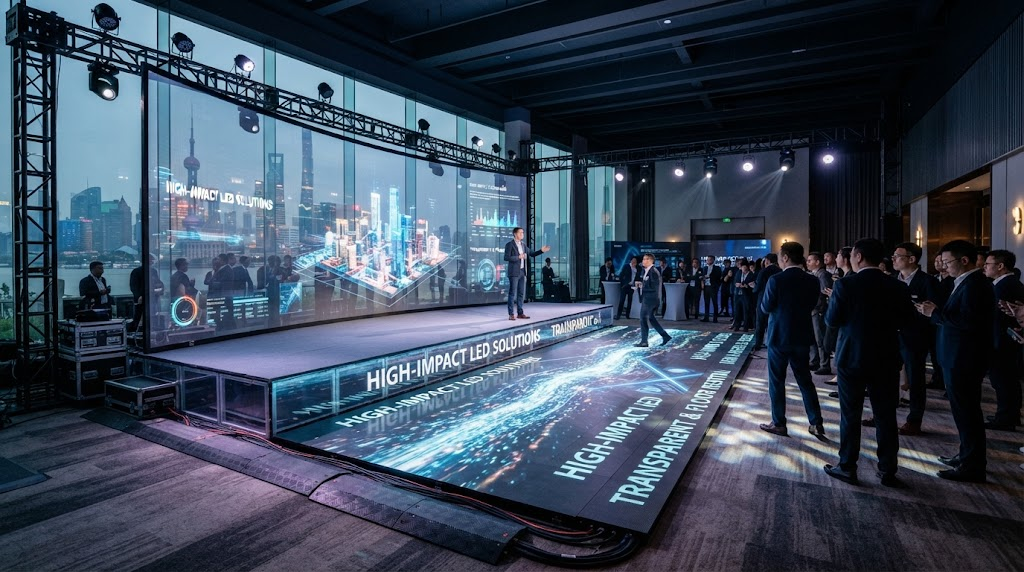
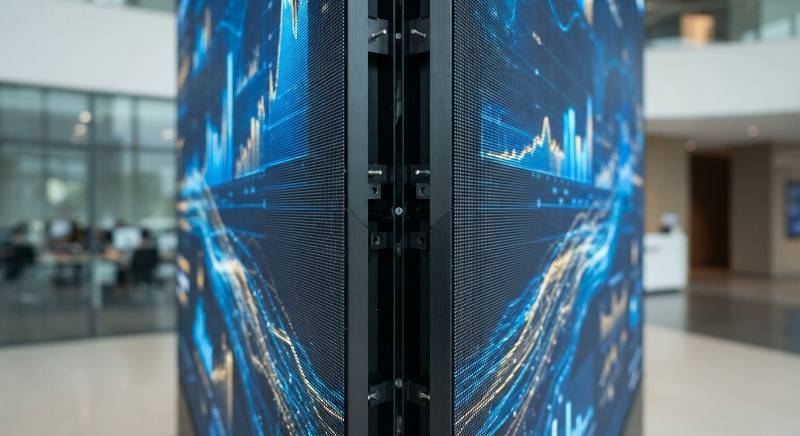
Virtual production has shifted from an experimental luxury to a fundamental filmmaking standard. The transition from traditional green screens to an indoor LED volume allows directors to see final pixels in real-time. This leap in technology relies entirely on precise XR LED display engineering.
Guanhong Display leads this evolution by providing hardware that meets the rigorous demands of In-Camera VFX (ICVFX). By integrating Fine Pitch LED Walls with advanced processing, we enable studios to capture stunning, photorealistic environments without the limitations of traditional post-production.
Visual Fidelity Standards: Color Gamut and Refresh Rates
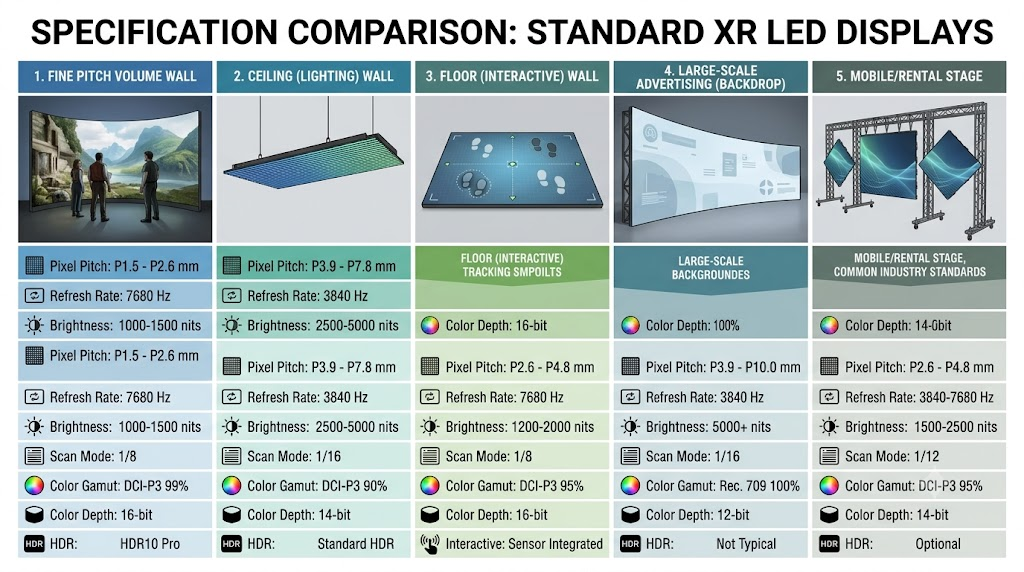
For professional XR stages, a pixel pitch between P1.5 and P2.6 combined with a 7680Hz refresh rate and 99% DCI-P3 color gamut coverage is essential. These specifications ensure flicker-free filming, eliminate moiré patterns at standard viewing distances, and provide the cinematic color depth required for high-end HDR production.
High-end cinematography demands grayscale depth that exceeds standard commercial displays. In 2026, our panels support 16-bit to 22-bit internal processing. This prevents "banding" in dark gradients, a common failure point in lower-quality screens.
The 144Hz high frame rate support is another critical benchmark. As cameras move toward higher frame rate capture, the LED wall must keep pace to maintain perfect motion blur and synchronization.
The Guanhong "Sync-Master" Protocol for Artifact-Free Filming
We developed the Sync-Master Protocol to bridge the gap between LED refresh cycles and camera shutter timing. Based on our data from over 500 studio installations, even minor desync can ruin a day of shooting.
"Achieving perfect in-camera VFX isn't just about pixel pitch; it’s about how the silicon talks to the sensor. If the timing is off by even a microsecond, you get black lines or ghosting."
— Senior XR Technical Director, Guanhong Display
Our methodology involves a three-step calibration process: sensor-to-wall mapping, latency offset adjustment, and spectral power distribution matching. This ensures the light emitted by our Rental LED Display Solutions reacts exactly like natural light on the actors' skin.
Deep Dive: Solving Screen Tearing with Genlock and Frame Multiplexing
Screen tearing occurs when the camera captures the LED wall mid-refresh. To solve this, we utilize Genlock technology. This forces the LED processor to wait for a signal from the camera before drawing the next frame.
Frame Multiplexing is the next frontier. This allows a single LED wall to display different backgrounds for multiple cameras simultaneously. By alternating frames at speeds invisible to the human eye, Camera A sees a forest while Camera B sees a city, both shooting in the same virtual production LED screen rental environment.
Hardware Engineering: Pixel Pitch and Scan Rates
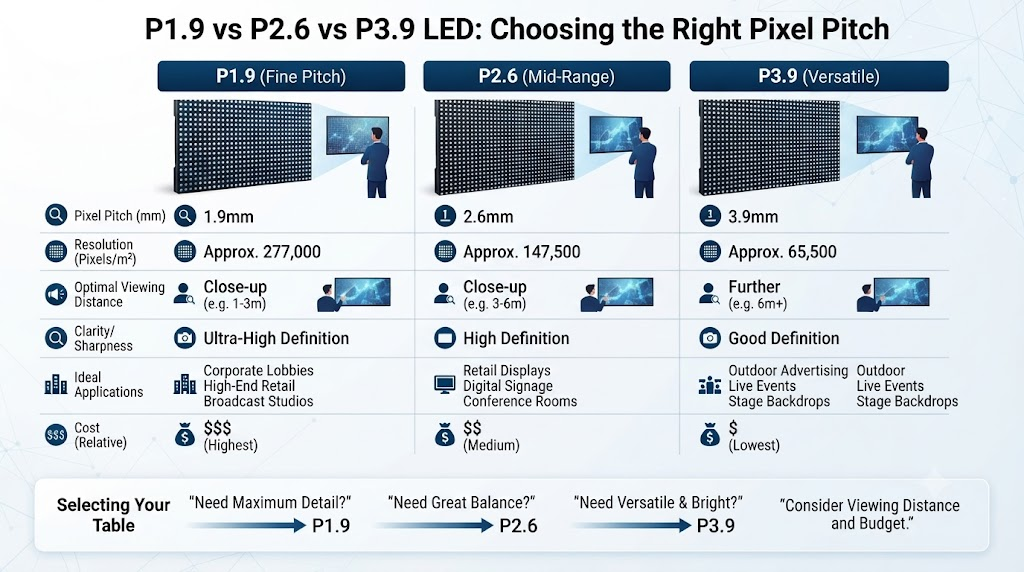
Why does P1.5 to P2.6 dominate? It is the "sweet spot" for viewing distance. In most XR stages, the talent stands 10 to 15 feet from the screen. At this range, a P1.9 or P2.6 pitch is indistinguishable from a solid image to the camera lens.
| Feature | Standard Display | Guanhong XR Series |
|---|---|---|
| Refresh Rate | 3840Hz | 7680Hz+ |
| Scan Rate | 1/16 or 1/32 | 1/8 or Lower |
| Color Gamut | Rec.709 | 99% DCI-P3 |
| Sync Support | None | Full Genlock / Frame Multi |
Crucially, we use a 1/8 scan rate or better. Higher scan rates (like 1/32) cause horizontal scan lines to appear when filmed at high shutter speeds. Our engineering focus on low scan rates ensures a stable image regardless of camera settings.
Software Ecosystem: Unreal Engine and disguise Compatibility
A fine pitch XR display is only as good as the software driving it. Guanhong screens are fully compatible with Unreal Engine (Epic Games) and disguise media servers.
Our hardware supports nDisplay configuration out of the box. This ensures that when you render a 3D environment, the perspective shifts perfectly with the Mo-Sys or Stype camera tracking systems. We also utilize Brompton Processing and Novastar Control Systems for industry-standard color mapping.
Operational Efficiency: Heat Dissipation and Power Consumption
Studios are enclosed spaces. Heat is the enemy of both electronics and actors. We utilize Common Cathode LED technology, which provides power to the Red, Green, and Blue chips separately at their ideal voltages.
This reduces power consumption by up to 30% and significantly lowers heat dissipation. Our magnesium alloy LED cabinet design acts as a natural heatsink, allowing for fanless operation—a critical requirement for capturing clean audio on set.
Total Cost of Ownership (TCO) for Virtual Studios
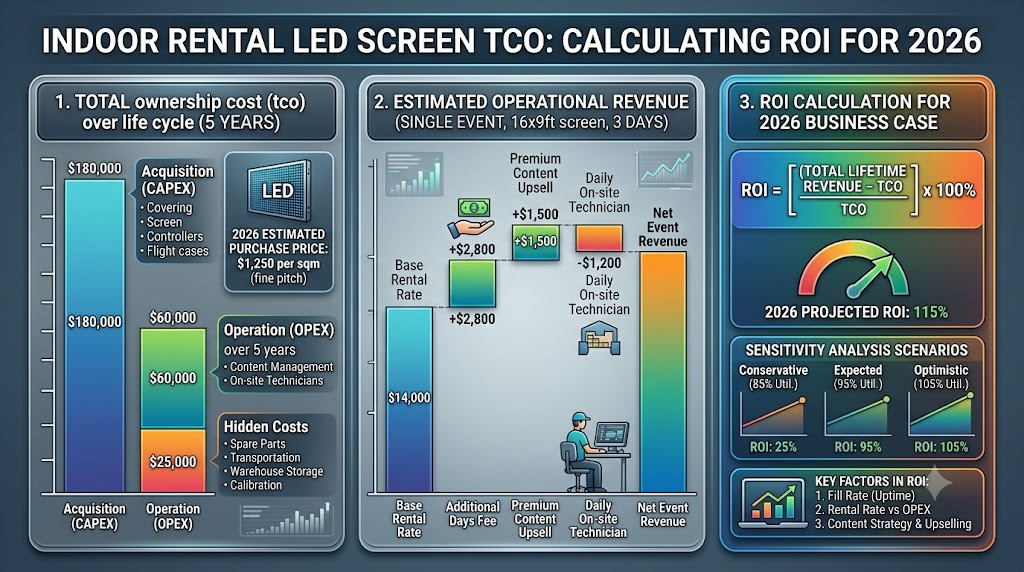
Investing in an Indoor LED Signage solution for virtual production is a long-term play. While the initial cost is higher than a green screen, the virtual studio ROI is realized through eliminated travel costs and reduced post-production time.
Maintenance is simplified through our front-access modular design. If a single pixel fails during a shoot, a module can be swapped in under 60 seconds without dismantling the entire LED volume. This calibration stability ensures that your wall looks the same on day 100 as it did on day 1.
Frequently Asked Questions about XR LED Displays
How do I avoid moiré patterns on my LED wall?
Moiré occurs when the camera resolution exceeds the LED pixel density. Using a P1.5 to P2.1 screen or slightly softening the focus on the background prevents this. Our moiré pattern calculator helps you determine the safe camera distance for any lens.
What bit depth is required for ICVFX?
For cinematic work, 10-bit or 12-bit input with 16-bit internal processing is the standard. This allows for the high dynamic range (HDR10) necessary for realistic lighting reflections on actors.
Can I use standard rental screens for virtual production?
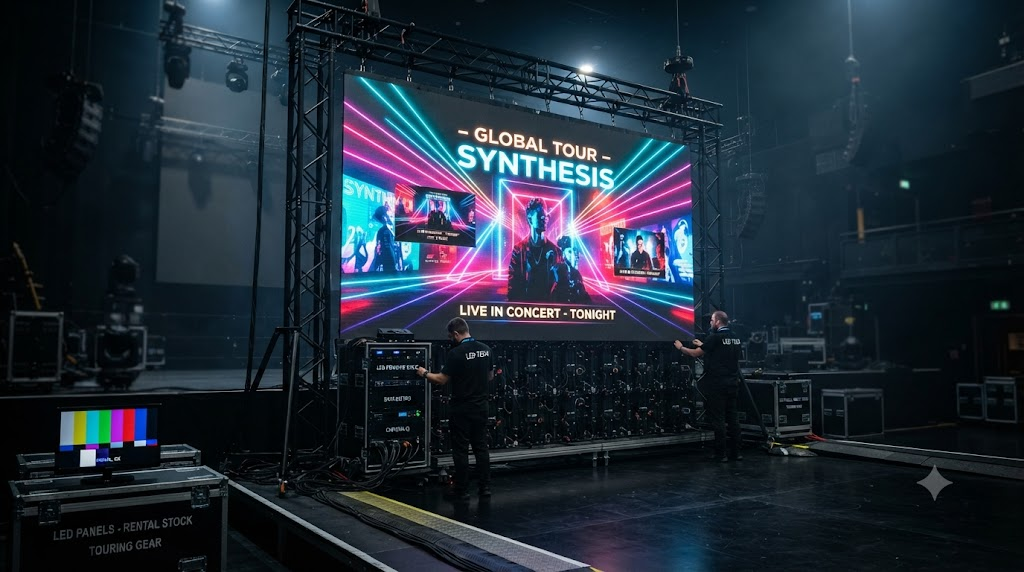
Generally, no. Standard screens lack Genlock and have high scan rates, which cause flickering on camera. Dedicated XR LED displays are required for professional results.
Ready to Build Your Virtual Production Stage?
Get a custom XR studio cost assessment or book a live XR studio demo with our technical team today. Let Guanhong Display power your next cinematic masterpiece.
Get a Custom Quote & Demo