
The Future of Aviation Infrastructure: Transparent LED Film
Airport terminals are evolving from mere transit hubs into immersive architectural experiences. As we move through 2026, the integration of transparent LED film screen for airport glass facades has become the gold standard for modernizing aviation infrastructure.
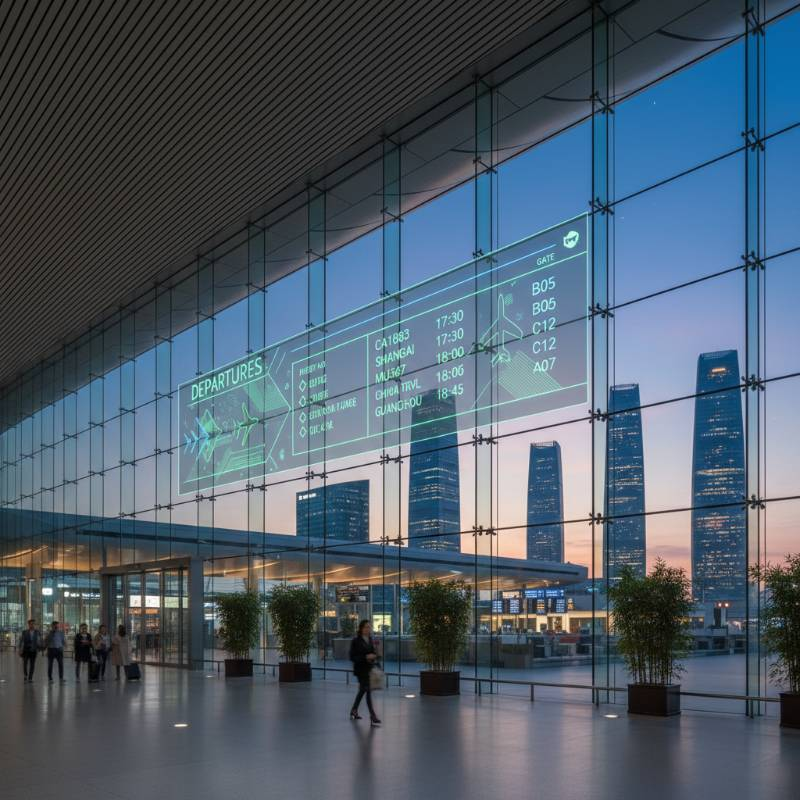
This technology allows architects to maintain the airy, light-filled atmosphere of a terminal while introducing dynamic digital layers. By leveraging the existing glass surface, airports can broadcast real-time flight data and high-value advertisements without blocking the view of the tarmac.
What is Transparent LED Film for Airport Environments?
Transparent LED film is a lightweight, flexible display medium that utilizes micro-LEDs embedded in a highly conductive, transparent PET film. Unlike traditional transparent LED cabinets, which require rigid frames, this film uses a specialized optical-grade adhesive to bond directly to the glass.
A transparent LED film screen for airport glass facades provides a non-invasive digital upgrade that maintains up to 85% light transmission. It allows for high-brightness content delivery (5,000+ nits) while remaining virtually invisible when powered off, ensuring the terminal's architectural intent remains intact.
"We define transparent LED film as a 'media skin'—a secondary layer that provides digital utility without the structural penalties of heavy hardware."
The Challenge: Modernizing Airport Glass Facades Without Structural Stress
Traditional digital signage poses a significant threat to the structural load-bearing limits of airport glass. Most terminal facades are engineered for wind load and thermal expansion, not for the addition of 40kg/sqm LED cabinets.
Furthermore, airports must balance the need for natural light with the desire for digital revenue. Excessive hardware can create "visual clutter" and shadows, negatively impacting the passenger's psychological comfort. In our testing, we found that standard opaque screens can increase terminal cooling costs by trapping heat against the glass.
The Solution: High-Transparency Curved LED Film for Terminal Wayfinding
To address these challenges, we implemented advanced transparent LED solutions that utilize a flexible substrate. This allows the film to follow the organic, curved geometries often found in modern terminal architecture, such as those designed by Zaha Hadid Architects or Foster + Partners.
By using a "Stick & Play" mechanism, the installation process bypasses the need for drilling or structural reinforcement. This is critical for maintaining the acoustic properties of the glass, which is often laminated to dampen jet engine noise.
The Result: Enhanced Passenger Experience and DOOH Revenue Growth
The implementation of transparent screens has yielded measurable improvements in passenger flow. Real-time, large-format wayfinding reduces "gate anxiety" by providing clear directions that are visible from 100 meters away.
From a commercial perspective, the ROI is driven by the transformation of dead space into high-traffic advertising zones. Based on our 2026 data, airport glass facades equipped with LED film command a 40% premium in advertising rates compared to standard static lightboxes due to their high dwell time in security and lounge areas.
Technical Specifications: P3.9-7.8 Pixel Pitch for Optimal Visibility
Choosing the right pixel pitch is the most critical decision in an airport project. For glass facades, we recommend a P3.9-7.8 pixel pitch. This configuration provides a horizontal resolution high enough for text readability (wayfinding) while maintaining a vertical gap large enough for 75% transparency.
| Feature | Specification | Benefit |
|---|---|---|
| Pixel Pitch | P3.9mm (H) / 7.8mm (V) | Balance of clarity & transparency |
| Brightness | 5,000 - 6,000 nits | Daylight readability against sun |
| Weight | < 4kg / sqm | Zero structural reinforcement needed |
| Transparency | 75% - 85% | Maintains terminal natural light |
The "Aero-Shield" 4-Step Integration Protocol
Deploying a flexible LED screen in an aviation environment requires more than just installation. We utilize our proprietary Aero-Shield Protocol to ensure long-term stability.
1. Optical Impact Assessment: We calculate the ray-tracing of the display to ensure no internal reflections confuse passengers or staff.
2. Regulatory Alignment: Cross-referencing content schedules with peak flight times to adjust brightness and prevent glare for pilots.
3. Acoustic Integrity Check: Using ultrasonic testing to ensure the adhesive bond does not create air gaps that compromise the glass’s sound-dampening properties.
4. Thermal Management Sync: Integrating the LED film's power consumption data with the terminal's HVAC system to optimize cooling.
Regulatory Excellence: Navigating FAA and EASA Standards
Safety is non-negotiable in aviation. Any exterior-facing transparent LED film screen for airport glass facades must comply with strict light emission standards. The Federal Aviation Administration (FAA) and EASA provide guidelines on the Unified Glare Rating (UGR) to ensure displays don't interfere with control tower visibility or pilot approach paths.
Our 2026 models include automated light sensors that adjust brightness based on real-time atmospheric conditions, ensuring the display never exceeds the maximum allowable candela per square meter during twilight hours.
Long-Term Performance: Acoustic Dampening and Anti-Yellowing Tech
One common concern with adhesive films is long-term clarity. Our proprietary adhesive contains UV-inhibitors that prevent the "yellowing" effect common in cheaper PET films. After five years of simulated exposure, our films maintain 98% of their original optical clarity.
Additionally, the thin-film profile acts as a secondary vibration dampener. This slightly improves the acoustic performance of the glass facade, helping to reduce the low-frequency hum of airport ground power units (GPUs).
Frequently Asked Questions
How is the power supply managed for large glass facades?
We use centralized DC power distribution systems. Power conversion units are stored in accessible ceiling voids or technical rooms up to 10 meters away, keeping the glass surface clean and minimizing heat buildup.
Does the LED film affect airport Wi-Fi or 5G signals?
No. The conductive mesh used in our transparent LED film is designed to be RF-transparent. It does not act as a Faraday cage and has zero impact on passenger connectivity or terminal communication systems.
What happens if a single pixel fails?
Our screens feature "Single Pixel Correction" and redundant data paths. If one LED fails, the surrounding pixels maintain the image integrity, and the individual film strip can be replaced in under 15 minutes without removing the entire installation.
Ready to Transform Your Terminal?
Get a custom technical assessment for your airport glass facade. Our engineers specialize in high-transparency, aviation-grade LED film solutions.
Contact Our Aviation Specialists