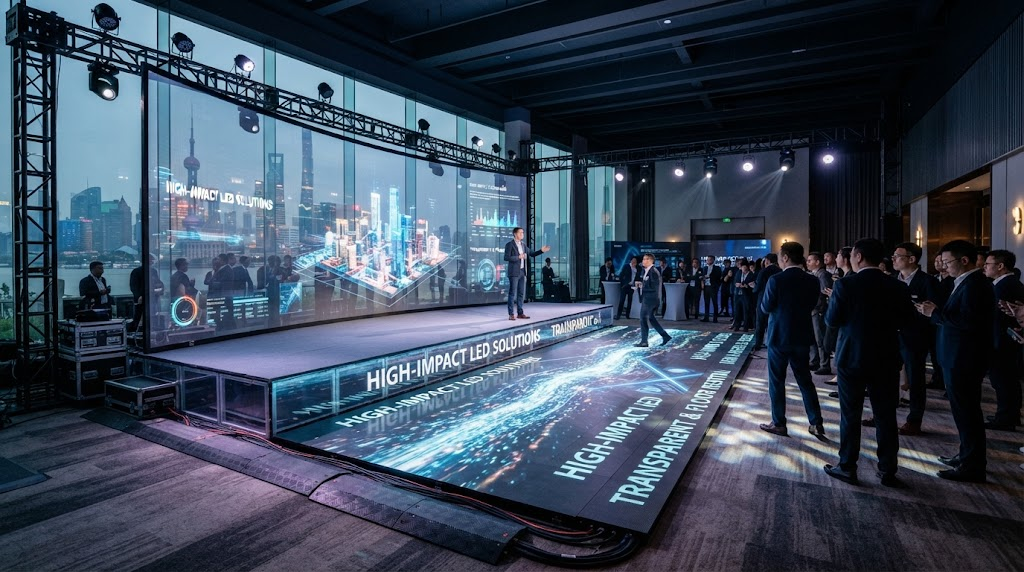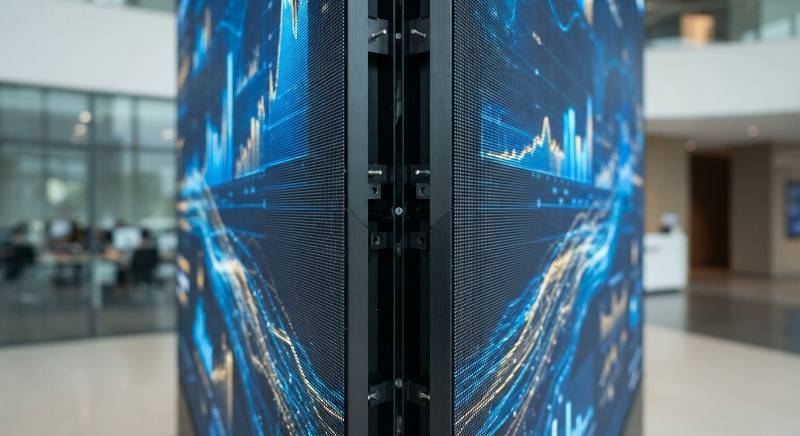

Choosing the Right Transparent LED Screen Pixel Pitch
Selecting the optimal pixel pitch for a transparent LED screen is the most critical decision in digital signage procurement. It dictates visual clarity, transparency levels, and project ROI.
At Guanhong Display, our engineering team adheres to the InfoComm CTS (Certified Technology Specialist) standards. We ensure every architectural integration balances aesthetic transparency with high-definition impact.
The Guanhong Transparency-Resolution Equilibrium Model
Choosing a transparent LED screen involves navigating the "Transparency Paradox." Our proprietary Guanhong Transparency-Resolution Equilibrium Model defines the inverse relationship between diode density and light transmission.
For most commercial projects, the best pixel pitch is determined by balancing the required transparency percentage against the minimum viewing distance. A tighter pitch like P2.9 uses more SMD lamps per square meter, which naturally blocks more light, potentially dropping transparency to 60%.
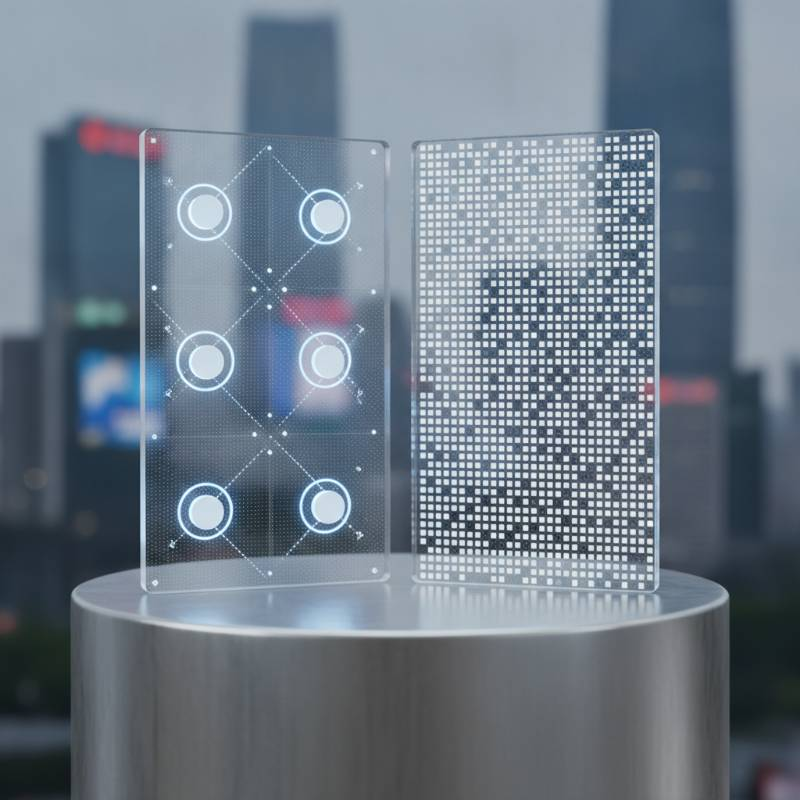
"Based on our 2026 engineering data, 70% of retail clients over-specify resolution. A P3.9/P7.8 hybrid often delivers better ROI than a pure P2.9 by maintaining higher transparency without sacrificing perceived image quality at 5 meters." — Guanhong Engineering Team.
The Industrial Calculation for Optimal Viewing Distance
To determine the correct pitch, we apply the Optimal Viewing Distance (OVD) Formula. This is a standard taught in InfoComm CTS certification for high-performance Indoor LED Display Solutions.
The Formula:
Minimum Viewing Distance (m) = Pixel Pitch (mm) × 1
Optimal Viewing Distance (m) = Pixel Pitch (mm) × 2
If your audience is standing 4 meters away, a P3.9 screen provides a seamless "retina" experience. If the screen is mounted high on a building facade where the closest viewer is 20 meters away, a P10.4 or even P15.6 pitch is far more cost-effective.
Technical Comparison: P3.9 vs. P7.8 vs. P10.4
Our 2026 Custom Glass LED Walls utilize advanced SMD technology to maximize brightness while minimizing the profile of the PCB strips.
| Pitch (mm) | Transparency | Optimal Distance | Best Use Case |
|---|---|---|---|
| P3.9 x P7.8 | ~70% | 4m - 10m | Retail Windows, Showrooms |
| P7.8 x P7.8 | ~75-80% | 8m - 15m | Auto 4S Shops, Malls |
| P10.4 x P10.4 | ~85% | 10m - 25m | Large Glass Facades, DOOH |
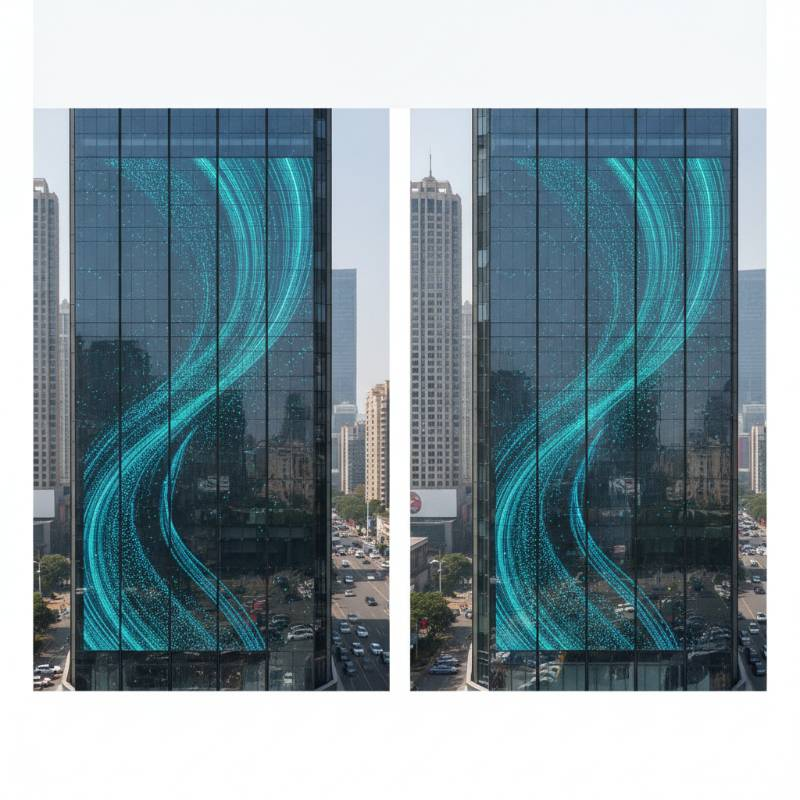
Environmental Impact: Nits and Ambient Light
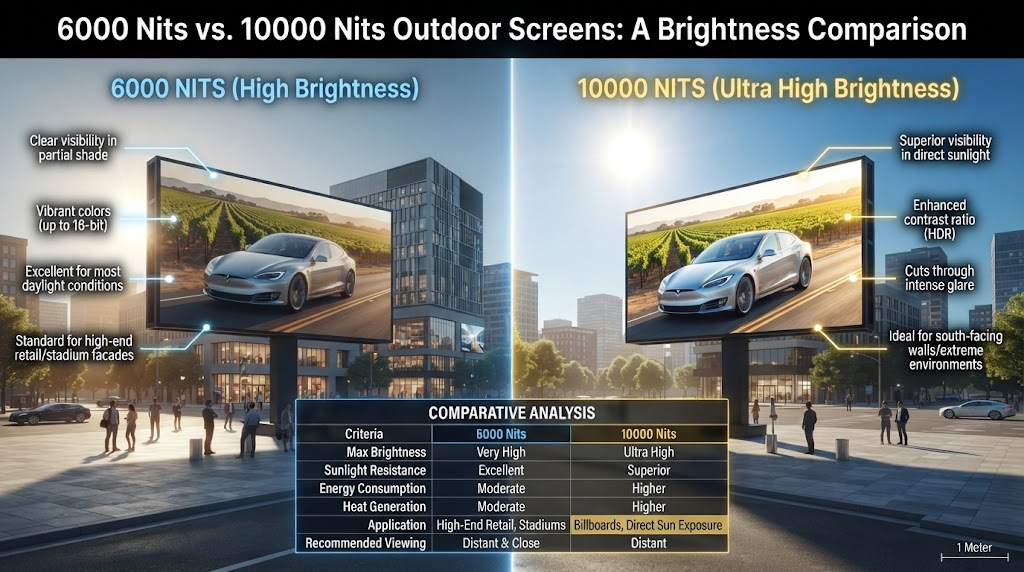
Pixel pitch isn't the only factor. For outdoor-facing storefronts, brightness (nits) is paramount. Our high-brightness modules reach up to 5,500 nits, ensuring visibility against direct sunlight.
In high-glare environments, a slightly wider pitch (like P7.8) allows for larger, more powerful LEDs that can cut through reflections more effectively than the tiny LEDs used in ultra-fine pitch screens.
Structural Considerations for Glass Curtain Walls
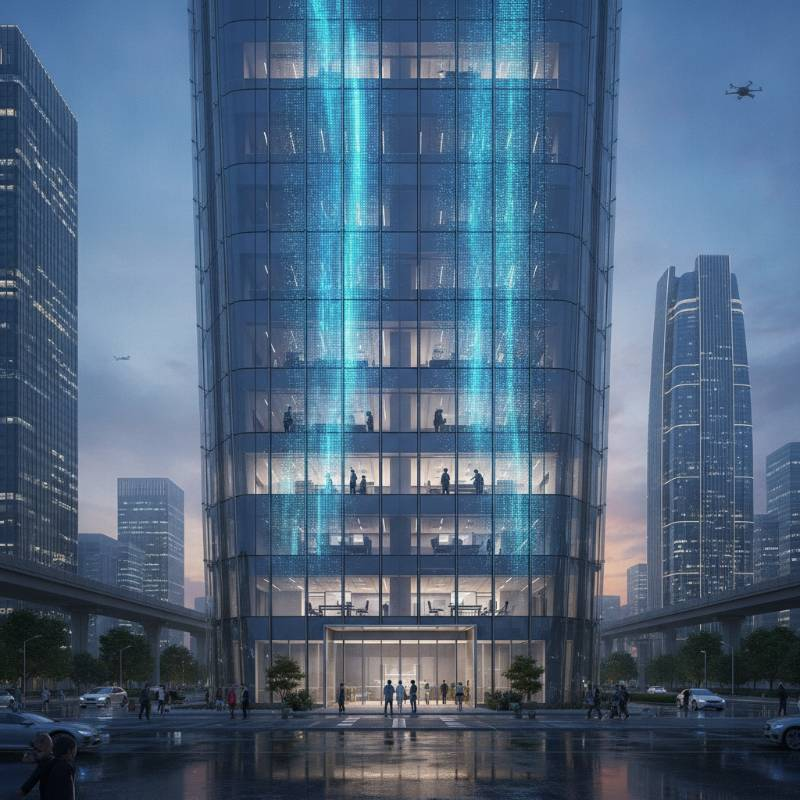
Integration into existing architectural glass requires a deep understanding of structural integrity. Heavier cabinets with fine pixel pitches increase the load on the curtain wall frame.
Guanhong's 2026 cabinet designs utilize lightweight magnesium alloys. We offer both front and rear maintenance options, which is essential for glass walls where external access is often restricted or requires expensive scaffolding.
ROI and Total Cost of Ownership (TCO) Modeling
From a commercial perspective, the "right" pitch is the one that maximizes Technical ROI. This model factors in power consumption per square meter and long-term durability.
Wider pixel pitches (P10.4) consume significantly less power and require fewer driver ICs, leading to lower heat generation and a longer lifespan. For large-scale DOOH advertising, the TCO of a P10.4 screen is often 30% lower than a P3.9 screen over a 5-year period.
Free Project Evaluation & Pixel Pitch Recommendation
Stop guessing your technical specs. Get a professional engineering report for your specific project dimensions and viewing distances.
Our InfoComm CTS Certified Engineers will provide a custom solution within 24 hours.
Get My Custom Engineering ReportFrequently Asked Questions
Which pixel pitch is best for a retail window?
For most retail storefronts, P3.9 x P7.8 is the ideal choice. It provides enough resolution for text and high-quality branding while maintaining approximately 70% transparency for natural light.
How does pixel pitch affect transparent LED screen cost?
The cost is directly related to the density of the LEDs. A P3.9 screen has roughly four times the number of LEDs as a P7.8 screen, making it significantly more expensive in terms of both manufacturing and power requirements.
Can transparent LED screens be used outdoors?
Yes, but they require higher ingress protection (IP65+) and higher brightness (over 5,000 nits). We recommend checking AVIXA standards for outdoor digital signage safety and visibility.