
Transparent LED Displays for Auto Dealerships: Enhancing Luxury Showrooms with True-to-Life Color
What is a High-Performance Transparent LED Display for Car Showrooms?
A high-performance transparent LED display is a specialized digital signage solution designed to integrate seamlessly with glass curtain walls. Unlike traditional opaque screens, these displays maintain up to 80% transparency, allowing natural light to flood the showroom while projecting high-definition marketing content.
For modern auto dealerships, this technology serves as a bridge between the digital brand experience and the physical vehicle. It transforms a standard glass facade into a dynamic storytelling medium without obstructing the customer's view of the cars on the floor.
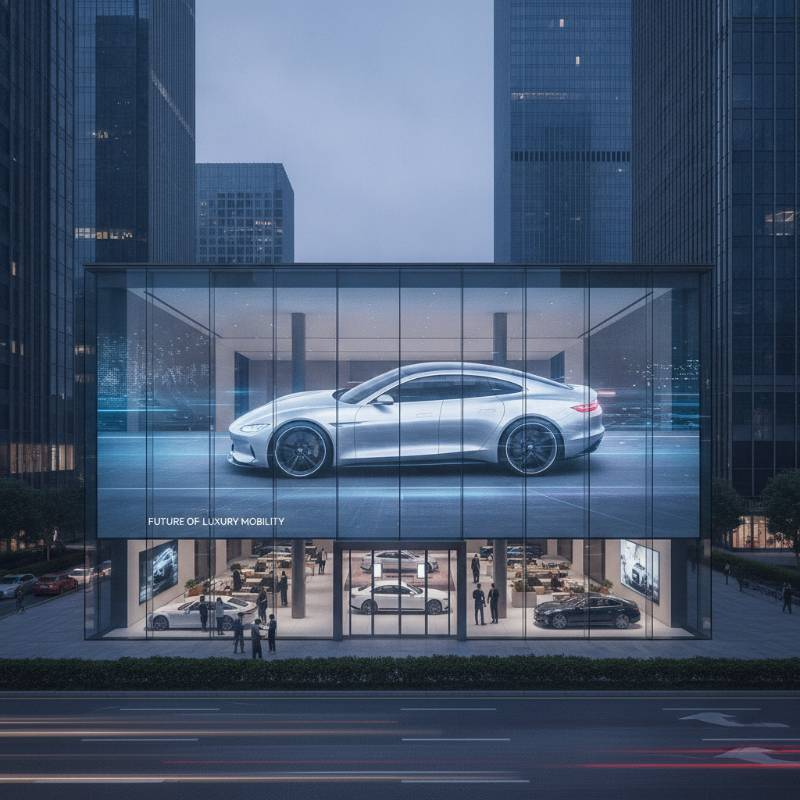
"Transparency in automotive retail is about more than just light; it is about maintaining the architectural integrity of the showroom while delivering high-impact Transparent LED Screen Technology that captures attention from the street."
Technical Precision: 16-bit Grayscale and DCI-P3 Color Accuracy
In the luxury automotive sector, color accuracy is non-negotiable. A "Soul Red" or "Brooklyn Grey" must look identical on the screen as it does on the vehicle. To achieve this, Guanhong Display utilizes 16-bit grayscale processing.
This high bit-depth allows for 65,536 levels of brightness per color, ensuring smooth gradients and preventing "banding" in shadow areas. When combined with a contrast ratio exceeding 5000:1, the display reveals intricate details in the dark curves of a vehicle's bodywork that lower-tier screens simply cannot reproduce.
Our panels are engineered to cover ≥95% of the DCI-P3 color gamut. This professional cinema standard ensures that the vibrant, high-saturation colors used in modern car paint finishes are rendered with absolute fidelity, meeting the strict brand guidelines of Tier-1 manufacturers.
The P3.9 Specification: Why Pixel Pitch Matters for Viewing Distance
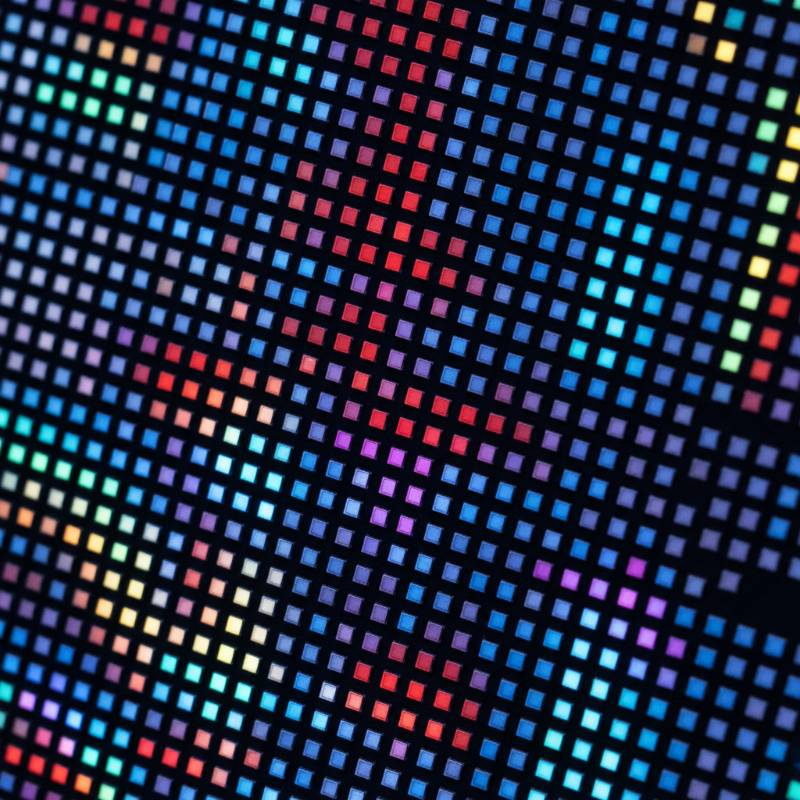
Choosing the correct pixel pitch is a balancing act between transparency and image clarity. For most auto dealerships, the P3.9 (3.9mm horizontal pitch) is the industry benchmark. This specification provides enough resolution for high-quality video playback at a viewing distance of 4-10 meters, which is typical for street-facing glass facades.
| Feature | Requirement | Impact |
|---|---|---|
| Pixel Pitch | P3.9 / P7.8 | Balances transparency and detail |
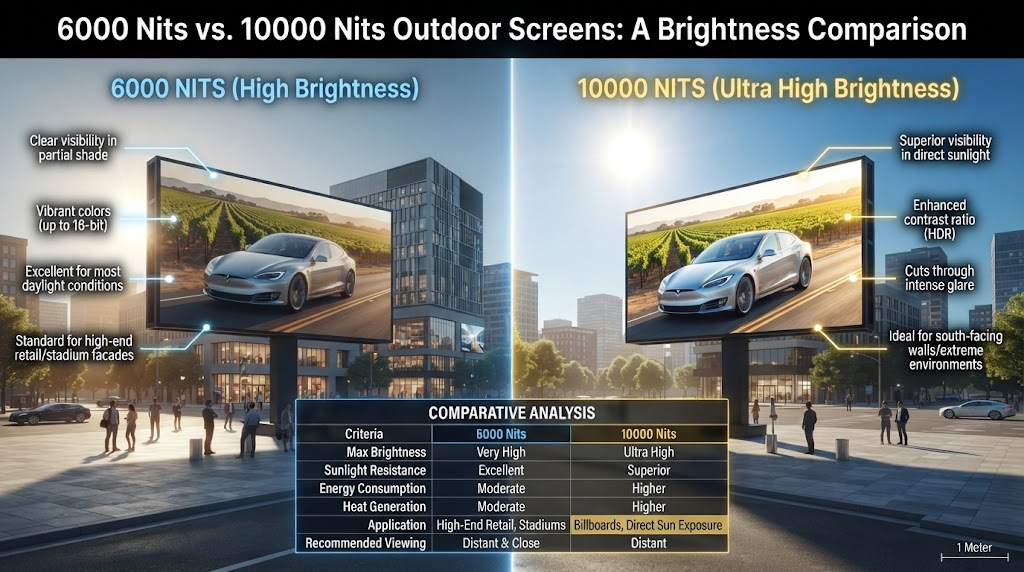
| Brightness | 4500 - 5500 nits | Visible in direct sunlight |
| Refresh Rate | ≥3840Hz | Flicker-free on smartphone cameras |
| Contrast Ratio | 5000:1 | Deep blacks and sharp edges |
The Guanhong "3-Tier Luminous Clarity" Protocol
Based on our 2026 deployment data, we have developed a proprietary framework for automotive installations: The 3-Tier Luminous Clarity Protocol. This methodology ensures that every screen we install performs optimally under the unique light conditions of a glass-walled showroom.
1. Ambient Light Synchronization
Dealerships experience massive fluctuations in light from morning to night. Our protocol uses automated sensors to adjust brightness in real-time, ensuring the screen is never "washed out" at noon or blindingly bright at dusk.
2. Structural Glass Integration
We don't just hang screens; we integrate them. This tier involves custom mounting brackets that align with the existing mullions of the glass curtain wall, minimizing the visual footprint of the support structure.
3. Dynamic Content Calibration
Content for transparent screens must be designed differently. We provide technical guidance on using "true black" backgrounds to maximize transparency and "edge-glow" effects to make vehicle renders pop against the physical showroom background.
Ensuring Uniformity: NovaStar Calibration and Batch Consistency
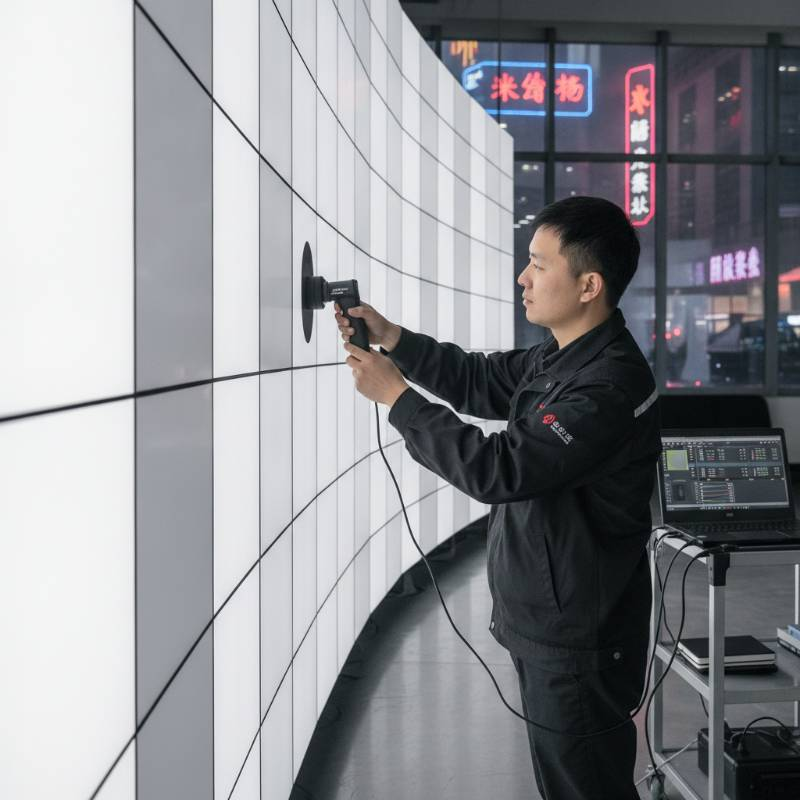
One of the most common failures in Indoor LED Display Solutions is the "patchwork" effect, where different cabinets show slight variations in color or brightness. At Guanhong Display, we eliminate this through rigorous NovaStar calibration.
Every batch of LEDs undergoes pixel-level brightness and chrominance calibration. This ensures that even if you expand your display a year later, the new modules will match your existing wall perfectly. According to the Society of Motion Picture and Television Engineers (SMPTE), visual uniformity is the single most important factor in viewer immersion.
Strategic Integration: From Glass Facades to Interactive Configurators
Transparent LED is not limited to the front window. Leading dealerships are using this technology for interior partitions. By placing a transparent screen between the showroom floor and the lounge, you can display technical specs of an EV powertrain while customers still see the actual car through the screen.
Furthermore, these displays are increasingly used in "Delivery Bays." When a customer picks up their new car, the transparent screen can display a personalized "Welcome" animation that dissolves to reveal the physical vehicle behind the glass—a high-value experience that drives social media engagement.
Expert Perspective: AV Consulting for Luxury Automotive Brands
Our lead AV consultant, who has overseen installations for BBA (BMW, Benz, Audi) flagship stores, emphasizes the psychological impact of digital signage.
"In luxury retail, the screen shouldn't feel like an appliance; it should feel like an architectural element. When we worked with German car manufacturers, the goal was always 'Digital Elegance.' By using 16-bit processing, we ensure the digital content has the same premium 'finish' as the car's clear coat. It's about maintaining brand prestige at every touchpoint."
— Lead AV Consultant, Guanhong Display
View our recent successes in our LED Display Case Studies to see how these theories translate into real-world ROI.
Frequently Asked Questions
How do you clean and maintain transparent LED strips?
Maintenance is straightforward. Our designs are front-serviceable, meaning individual LED strips can be replaced without dismantling the entire cabinet. For cleaning, a simple microfiber cloth and specialized non-static solution are used on the protective acrylic or glass face.
Does the heat from the LED damage the showroom glass?
No. Our transparent LED panels are designed with high-efficiency SMD technology and hollow structures that allow for natural heat dissipation. The temperature remains well within the safety limits for tempered architectural glass.
What is the energy consumption of a large-scale facade?
Transparent LEDs are actually more energy-efficient than traditional LCDs. Because "black" in the content means the LED is turned off (contributing to transparency), the average power consumption is significantly lower—typically around 250W-300W per square meter.
Ready to Transform Your Showroom?
Elevate your brand with the precision of 16-bit color and the clarity of P3.9 transparent technology. Our engineers are ready to design your custom visual solution.
View Automotive Showroom Portfolio