
Transparent LED Advertising for Modern Airport Terminals
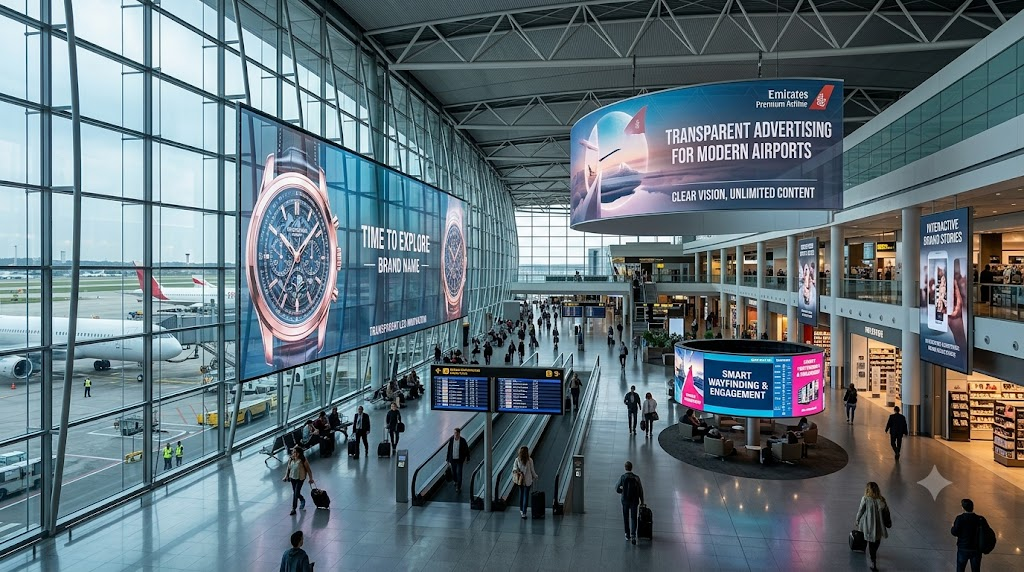
Airport terminals are the ultimate frontier for high-value Digital Out-of-Home (DOOH) advertising. In 2026, the demand for non-intrusive, high-impact displays has made airport transparent LED the gold standard for transportation hubs.
Guanhong Display provides specialized transportation hub LED display solutions that bridge the gap between architectural elegance and strict aviation safety. These screens transform massive glass facades into revenue-generating assets without blocking natural light or passenger sightlines.
Aviation-Grade Compliance: FCC Class B and EMC Standards
Airport environments are saturated with critical radio frequencies used by Air Traffic Control (ATC) and ground services. Standard commercial displays often emit electromagnetic interference (EMI) that can jeopardize safety. Guanhong Display engineers our screens to meet the stringent FCC Class B and EN55032 Class B standards.
These certifications ensure that our commercial advertising LED systems operate without bleeding noise into aviation communication bands. Our hardware undergoes rigorous testing to guarantee a "quiet" electronic profile, making them the only viable choice for gate areas and check-in halls.
"We define aviation-grade display as a system where electromagnetic silence is as important as visual brilliance. Our 2026 product line utilizes specialized shielding and grounded cabinet materials to achieve a near-zero EMI footprint." — Senior Aviation Signage Engineer, Guanhong Display
Engineering for 24/7 Reliability and Visual Precision
Airports never sleep. A display failure in a high-traffic terminal isn't just a missed ad impression—it's a blemish on the terminal's reputation. Guanhong Display guarantees 7x24 stability through redundant power supplies and industrial-grade driver ICs.
Our screens maintain a dead pixel rate of less than 1/100,000, significantly better than the industry average. To handle the transition from high-noon sunlight to nighttime terminal lighting, we integrate an ambient light sensor with 256-level auto-brightness. This ensures smooth transitions that prevent passenger eye strain while maintaining vivid nit brightness levels.
| Feature | Aviation Requirement | Guanhong Standard |
|---|---|---|
| EMC Compliance | Class B (Strict) | FCC/EN55032 Class B Certified |
| Brightness Control | Automatic / Non-glare | 256-level Smooth Transition |
| Operational Life | 100,000+ Hours | 7x24 Stability Guaranteed |
The ClearView-Aero Integration Protocol
Based on our extensive data from global transport projects, we have developed The ClearView-Aero Integration Protocol. This 3-step framework ensures every DOOH transparent screen installation is seamless and safe:
Structural Load-Bearing Assessment: We analyze existing glass curtain walls to ensure the lightweight LED mesh does not exceed structural limits.
Anti-Reflection Surface Coating: We apply a proprietary film to the display surface to prevent glare from interfering with passenger wayfinding and signage.
Centralized Cloud CMS Synchronization: Our systems sync directly with airport flight data (AODB) to deliver contextual advertising based on real-time arrival and departure demographics.
For projects requiring high-resolution imagery in outdoor-facing glass, we recommend exploring our Outdoor Advertising LED Screens for high-nit performance.
Maximizing ROI: Energy Efficiency and Programmatic DOOH
Transparent LED technology is inherently more energy-efficient. Because the display only powers pixels for active content (black areas remain transparent and unpowered), airports see a massive reduction in electricity costs. This "natural cooling" also extends the maintenance longevity of the internal components.
In 2026, programmatic DOOH allows airport authorities to sell screen time in real-time auctions. By utilizing a custom digital signage solution, terminals can target specific passenger profiles, increasing the value of every second the screen is active. This leads to a significantly faster ROI compared to traditional static or LCD-based displays.
Front-Serviceable Maintenance in High-Security Zones
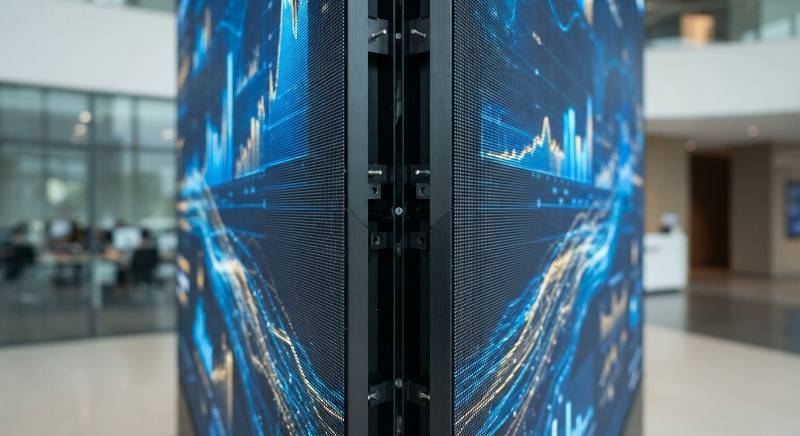
Logistics in airports are complex. Accessing the rear of a display often requires entering restricted security zones, which involves background checks and significant delays. Guanhong's front-serviceable LED modules allow technicians to replace components from the passenger side in minutes.
All materials used in our airport displays meet NFPA 72 safety and flame retardant standards. This ensures that in the event of an emergency, the screens do not contribute to smoke toxicity or fire spread, meeting the safety guidelines set by the Federal Aviation Administration (FAA) and EASA.
For more detailed technical support on keeping your hardware in peak condition, refer to our guide on Professional LED Display Maintenance.
Frequently Asked Questions
Will transparent LED screens interfere with airport radar?
No. When certified as EMC Class B, the electromagnetic radiation is low enough that it has no measurable impact on radar or communication systems.
How do you handle fire safety ratings?
Our displays use flame-retardant PCB materials and low-smoke zero-halogen (LSZH) cabling to meet international airport fire codes.
Can these be installed on existing glass?
Yes. Our Custom Digital Signage Solutions include lightweight mounting frames designed specifically for glass-wall retrofitting.